Four numbers tell you more about a warehouse robot than a glossy demo: payload in kilograms, runtime in hours, aisle width in millimeters, and tasks completed per hour.
The global race is moving toward machines that can handle those limits in busy buildings, not robots that only work on an empty test floor.
- Payload shows which boxes the robot can carry.
- Runtime sets the length of each work period.
- Aisle width decides where the robot can move.
What warehouse robots must do
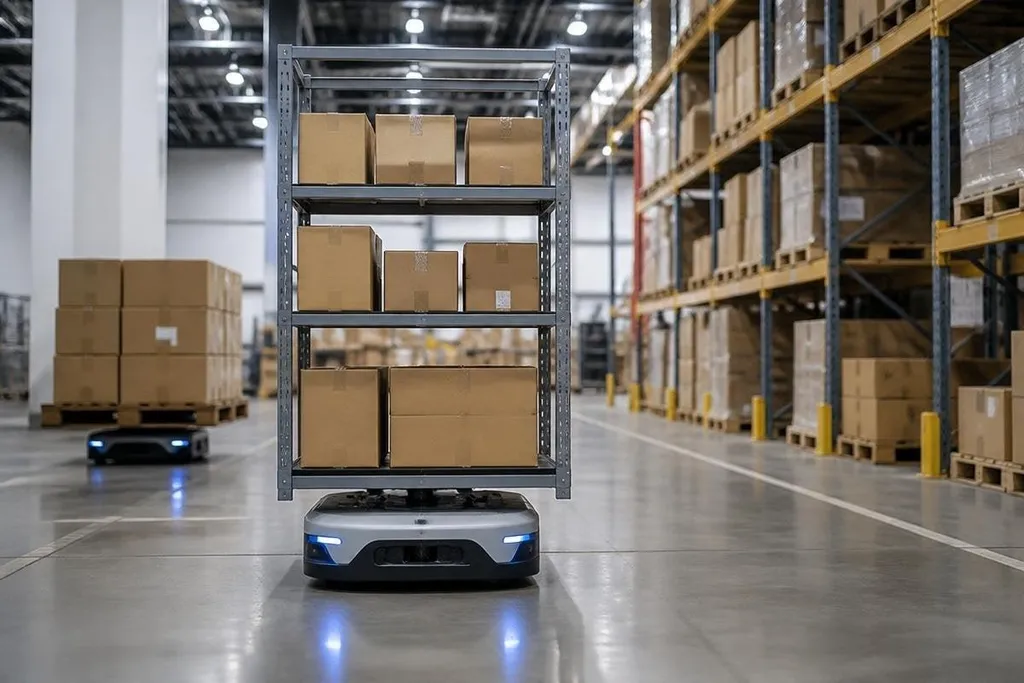
A warehouse robot has to move through changing spaces, find its assigned location, and complete a physical task. That may mean carrying a tote, bringing shelves to a worker, picking an item, or moving a pallet.
The task decides the design. A mobile robot that carries a tote needs wheels, sensors, a battery, and software that plans routes. A picking robot needs an arm, a gripper, cameras, and a way to deal with items that may arrive in different positions.
That last part causes much of the engineering work. A box on a fixed conveyor is easier to pick than a soft bag in a mixed bin. The robot must see the item, choose a grip, apply enough force, and place it without slowing the line.
The race is about useful work
Speed alone doesn't settle the question. Moving at 2 m/s but stopping often may do less work than moving at 1 m/s with fewer pauses.
Buyers need task figures from the same setting. Ask how many picks or trips the robot completed per hour, how often a person had to step in, and how long it took to recover from a blocked route. Those details connect a lab result to a warehouse bill.
Fleet software matters for the same reason. It assigns jobs, keeps robots apart, and sends a machine to charge when its battery runs low. A warehouse manager also needs records of stops, failed picks, and repair time because those events affect staffing and output.
When a warehouse robot misses a pallet, the useful record includes the sensor, aisle, task, and test date. Reports at Robot24.com can put those facts beside claims about named machines, leading into the next question: how better sensing changes the job.
Where better sensing helps
Most mobile warehouse robots use cameras, LiDAR, or both. LiDAR measures distance with light pulses, helping the robot build a map and detect people, racks, and other machines.
Sensors don't solve every problem. A clear plastic sheet, a low box, or a crowded staging area can confuse a robot's view. Good systems combine sensor data with rules that slow or stop the machine when the scene does not match its map.
The floor matters too. A robot designed for smooth concrete may struggle near a loading door, where ramps, dust, and small gaps change wheel grip. Buyers should ask for the floor type, slope, lighting, and temperature used in testing.
The limits buyers should check
Many robot claims leave out the work around the robot. A fleet may need charging points, marked walkways, network access, safety checks, and staff who can clear a failed machine.
Integration can take longer than the machine setup. The robot may need data from a warehouse management system, barcode readers, doors, lifts, or conveyor controls. If those links fail, a robot can wait even when its motors and sensors work correctly.
The open question is how well these systems handle new tasks. A robot trained for one tote size may need new software or a new gripper for another. A company that cannot explain the change process has left a large cost outside the price quote.
A buyer's decision check
Use this list before comparing robot models:
- Ask for the tested payload, speed, runtime, and stopping distance.
- Request task results from a warehouse with similar floors, shelves, and lighting.
- Count the human interventions during a full work period, not one short run.
- Price charging equipment, software links, training, spare parts, and service.
- Check how the robot handles blocked routes, lost labels, and empty storage locations.
- Set a trial target, such as trips per hour or picks per shift, before signing.
A good trial starts with one task and a clear measure. Run it through normal traffic, record every stop, and compare the result with the current process. That gives you a number worth using in a purchase decision.
I'd skip any robot whose maker shows speed but won't show intervention rates, recovery steps, and the full cost of running it. The race will be decided by repeatable work in crowded warehouses, with the next useful number coming from the shift log.